
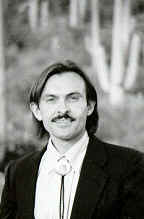

Lewis Mehl-Madrona


I have 22 fans:
Become a Fan
Become a Fan.
You'll get emails whenever I post articles on Futurehealth

Lewis Mehl-Madrona graduated from Stanford University School of Medicine and completed residencies in family medicine and in psychiatry at the University of Vermont. He is the author of Coyote Medicine, Coyote Healing, Coyote Wisdom, and Narrative Medicine.

www.mehl-madrona.com

Futurehealth Member for 170 week(s) and 4 day(s)

65 Articles, 0 Quick Links, 27 Comments, 0 Diaries, 0 Polls

65 Articles

Thursday, February 2, 2012
On the Nature of Afflictions
In this article I wonder about what illness has to offer us. What is the nature of affliction. Is it a thing or is it a doorway, an invitation to make meaning. All illnesses offer us this opportunity.

Monday, January 9, 2012
Reflections after a Hypnosis Workshop
I describe some reflections after co-teaching a hypnosis workshop. Particularly, we look at a person whose story is too large, as big even as the whole United States. How do we work with someone whose story is that large. I describe ways to extract smaller stories, short stories from the large novel, stories that can work within an hour time frame, the usual length of time for mental health or hypnosis encounters.

Friday, January 6, 2012
Mind, body, and unexplained symptoms
I describe a woman with a "mystery illness" who has defied the efforts of conventional physicians to diagnose her. She has also been unsuccessful at gaining help from alternative medical practitioners. I show how inflammation is an integrative process which can affect a variety of organs and can be provoked by stress, including the stress of worrying too much. We we can change the underlying process, we can reduce it.

Saturday, December 31, 2011
The Narrative Paradigm and the New Year
I write about my enthusiasm for the narrative paradigm for psychotherapy as we enter into 2012. Within this paradigm, we understand that we don't necessarily know the reasons for our actions, but rather we look for the stories that create the roles that guide us to do what we do. We find that people mostly know what needs to change in their lives but have stories that stop them from making those changes.

Sunday, December 4, 2011
Reflections on Teaching Statistics Again
I have the role of being the statistics teacher for a graduate psychology program in which students don't like statistics. I discover my hidden assumptions about students which may be relevant to life and to psychotherapy also. I reflect upon our attitudes toward math in North America and how different that is from Asian cultures. I reflect upon some students' resistance to problem-based learning and what that means.

Sunday, October 2, 2011
Excerpt from Coyote Wisdom Chapter 10
This excerpt tells the story of my work with Tiffany, a young woman with cancer who was from the Christian faith and how we used Meister Eckhart as a way to bridge my Native American philosophies with Christianity to create a healing dialogue throughout the course of her cancer. this seems like an important story to me because it shows how we can create healing (meaning and purpose) even when the patient dies.

Wednesday, September 7, 2011
Reflections upon transitioning to private practice
(1 comments) Just over 2 months ago I left the public mental health sector in New York to transition into private practice in Vermont. This article reflects upon those two months of changes and wonders what we can learn from the type of care available in Vermont compared to New York and from New York's apparent discrimination against paying private practitioners in favor of community mental health centers.

Sunday, September 4, 2011
Sundance No. 2, 2011
(1 comments) Barbara and I write this following our second sundance of the season. In this article we contemplate the idea of the sundance as an embodied metaphorical struggle in which the suffering and deprivation encountered are physical metaphors for the suffering of life. The mindset we use to embrace uncertainty matters in everyday life. We do best when we abandon the idea that we can know what is going to happen next.

Sunday, September 4, 2011
Accountability
(1 comments) This essay is about accountability. In the community mental health center where I have been working, most of the patients lack any sense of self-agency or accountability. Most see themselves as helpless victims of diseases over which they have no influence. They expect me to provide them with a drug that will regulate their moods and emotions and make them feel normal again. What does it take to restore a sense of agency?

Tuesday, July 5, 2011
Thoughts after Sundance 2011
(1 comments) I reflect upon Sundance 2011 and what I have learned. I realize that Sundance is about love and compassion and following this red road that leads to these directions. Sundance gives us an opportunity to rise to become spiritual warriors, to find all the benefits and none of the detriments of battle, to create a community of fellow warriors within which we can feel strong, and to transcend our natural limits to become more.

Sunday, April 24, 2011
Sweat Lodge, Prayer, and Community
Prayer and community have been stripped away from contemporary health care. Both are sorely needed. I talk about the sweat lodge ceremony as being a laboratory for exposing mainstream healthcare practitioners to the perspective on health and the world of Native American people and show how it produces the kind of connectedness and sense of belonging that we desperately need and which is associated with greater health.

Monday, April 4, 2011
Adolescent Addictions and Las Vegas
This weekend I attended an addictions and mental health conference focused upon adolescents in Las Vegas, Nevada. What an appropriate venue! I spoke about narrative practices in relation to addictions -- how we have to counter the dominant stories about magical potions and find other heroic stories that work equally well.

Wednesday, March 30, 2011
Nanglyala Mental Health Center
I write about the composite mental health center I have created in previous essays which comes from my and others' experiences working in mental health in New York State. I call it Nanglyala Mental Health Center, in honor of the Russian word for Valhalla, which one can't use, for it actually exists. I propose a thought experiment in changing the culture at NMHC, which I hope someone somewhere will be inspired to do.

Wednesday, March 23, 2011
Narrative and Science: Day 13 of the Australian Journey
Today was our last full day in Australia and the occasion for a lecture and series of discussions at the University of Melbourne's Center for International Mental Health and School of Population Health. We explored the bridges between science and the indigenous world view of narrative. Particularly we were impressed with how neuroscience is completely supporting indigenous knowledge about narrative and its importance!

Tuesday, March 22, 2011
The Power of Community: Day 12 of the Australian Journey
Day 12 of our Australian Journey for cross-cultural exchange in mental health was a low-key day of exchanges about healing in community. We explored the concept that healing cannot occur so easily without involvement of the entire community. Those people to whom we are accountable must agree to allow us to change, or we will not change. We must be invited by the important others in our life to perform a different story.

Monday, March 21, 2011
Beyond Narrative Therapy: Day 11 of the Australian Journey
(1 comments) On Day 11, we engaged in dialogue about the narrative therapy of Michael White, which is what most people in Australia and the United States index, when we say narrative practices, and the narrative practices of indigenous people. While we deeply respect Michael White's contributions to psychology and humanity, we present him as one branch on a tree of narrative in which indigenous people live in the trunk and the roots.

Saturday, March 19, 2011
Approaches to Trauma in the Indigenous Community -- Day 10 of the Australian Journey
Today is Day 10 of the Australian Cross-Cultural Mental Health Journey. Today we talked about trauma in aboriginal communities and how to address that trauma. We collaboratively arrived at some ideas to propose. We agreed that narrativizing is necessary. We need to hear the stories of woundedness that people have to tell and to celebrate their resistance to abuse and to focus more on the resistance than on being a victim.

Friday, March 18, 2011
Implementing Narrative Practices: Day 9 in Australia
The highlight of Day 9 in our Australian cross-cultural mental health journey was a workshop for indigenous mental health and human service providers on how to make their services more indigenous friendly. This involves, of course, conscious decolonization of our clinical practices. We talked about the need to become more narrative, to listen longer and more deeply to the stories people tell us and to hear stories of others.

Thursday, March 17, 2011
Narrativizing is the first step at becoming indigenous friendly -- Day 8
(1 comments) On Day 8, we asked how do we transform health care to become more indigenous friendly, whether it's mental health care of general medical care. The answer that jumped out was to implement narrative practice. Indigenous cultures are virtually uniformly cultures of story in which stories matter greatly. Being heard means having the opportunity to tell one's stories. "Treatment" begins by hearing and acknowledging stories.

Wednesday, March 16, 2011
Still More Similar Than Different -- Day 7 of the Australian Journey
(1 comments) Today finds us in Day 7 of our Australian Cross-Cultural Mental Health Journey. They lessons of these week have been very consistent -- indigenous from anywhere in the world is more similar than different. An elder proposed an answer for this. He said, "When you listen to the spirits and to nature and show respect, you get the same guidance 'cause spirits talk to each other. They know how the world should go!"

Tuesday, March 15, 2011
More Indigenous Similarities Despite Differences -- Day 6 of the Australian Journey
(1 comments) This is Day 6 of the Australian cross-cultural mental health exchange journey. Today we all experienced a form of healing used in the Northern Territories called "burning". They correct usage appears to be, "I burned her and she got well." One doesn't actually get burned, but palm bark is ceremonially placed in the area of an injury or sickness after having been made warm in a fire, accompanied by touch therapy and prayer.

Monday, March 14, 2011
Indigenous People are more Similar than Different -- Day 5 of the Australian Journey
(1 comments) Today is Day 5 of our Australian cross-cultural mental health adventure. We traveled from Melbourne to an aboriginal owned island which has ancient sites and is in the Gippsland Lakes. The take home message for the day came from a Gunnai-Kurnai aboriginal man at the end of the day, who said, "Indigenous people are more similar all over the world than they are different." He had the final word for the day, which is so true.

Sunday, March 13, 2011
Intergenerational and Historical Trauma: Day 4 of the Australia Journey
(1 comments) We continue our Australian cross-cultural mental health journey for day 4. Today's topic was intergenerational and historic trauma. In an inter-faith context we talked about the need for the suppressed stories to be told. We talked about epigenetics, which is the way in which the trauma of the ancestors are genetically transmitted across as many as four generations, if not more. We discussed the need to tell these stories.

Saturday, March 12, 2011
The Narrative Interview: Day 3 of the Australian Journey
(1 comments) Today finds us on Day 3 of our Australian cross-cultural journey. Our focus today is on the narrative interview. How would we interview people if our focus was to elicit their story instead of making a conventional DSM diagnosis. I interview a woman who has been suffering for 12 years and who has finally been offered an antidepressant medication. I show how her suffering can be rendered intelligible through narrative.

Saturday, March 12, 2011
Rescue: When is it Unethical?
(1 comments) An under explored ethical area is that of what Michael Ortiz Hill, in his marvelous new book, The Craft of Compassion, has called professional narcissism. This is when we need our clients to get well for our own needs. Of course, we want to think that we are effective and can help people, but the more we think this way and the less we think of dialogical resolution where each contributes to the outcome, the more harm we do.

Saturday, March 12, 2011
Imaging and doing are not as different as they sound
(1 comments) Contemporary neuroscience has shown us that imagining an act and performing an act are virtually the same. We can strength our muscles almost as much by imagining exercising as by exercising. If mind is so powerful, why aren't we harnessing it for the good. I fear that mostly we allow it to run for the bad, imagining ourselves in any number of dire straights and illnesses, instead of imagining ourselves hale as we should.

Saturday, March 12, 2011
Eqalitarian Healing: or What can we Learn from Vygotsky
Vygotskyan ideas are useful to explain a concept my colleagues and I are developing for egalitarian healing. We are working to undermine the expert professional/defective client model and to put those who help people and those who are helped on a more equal footing. Vygotskyan theory helps us understand how to do this. Vygotsky describes a More Knowledgeable Other concept in which this Other can teach learner missing skills

Friday, March 11, 2011
Suicide and Mental Health: Australia Journey Day 2
(1 comments) Lewis and Coyote Institute are on Day 2 of an Australian journey which is a cross-cultural exchange about ideas for mind and mental health. Today we focused upon suicide which elders told us was rare in Australia prior to European contact, but now, all to common. We focused upon suicide as a modern non-indigenous template for the communication of suffering which sometimes backfires leading to accidental death.

Thursday, March 10, 2011
Coyotes and Reclaiming Indigenous Knowledge
Three of us from Coyote Institute have journeyed to Australia to consult with a local aboriginal group on how to incorporate local culture into their health care and other services. This is the first in a series of daily blogs about the trip. I begin by wondering about coyote as a symbolic muse, an animal who lives at the margin and is currently expanding its territory. We discuss templates for the expression of pain.

Thursday, February 10, 2011
The Larger Stories of Education
(1 comments) Art and play are important in psychology and psychology education. I use the opportunity of attending the National Council of Schools of Professional Psychology annual meeting to speculate about the future of psychology education and to ponder the effects of for-profit institutions on education. I suggest that for-profit education can only be mediocre because real education aspires to creativity and for-profit standardizes.

Tuesday, January 18, 2011
What we can learn from Tucson and why not to overreact!
(1 comments) The recent tragedy in Tucson has led some commentators to demand more inpatient beds, easier commitment laws, and forced treatment with medication. I argue that none of this would have stopped Mr. Loughner, since he had not come to anyone's attention yet. We need to refrain from overreacting and further stigmatizing the mentally ill, who are, by and large, not violent, and we need to think about ways to reach out more.

Tuesday, January 18, 2011
Clinic Restructuring
I work part-time in a community mental health center in New York. Recently New York's Office of Mental Health has restructured clinical services. I write about what that has meant for quality of care, which inevitably goes down. I argue that this is inevitable in a "fee-for-service" system. I argue that the alternative is to pay physicians to care for panels of people and to do the best job as they see fit for these people.

Sunday, December 19, 2010
Hearing Voices and Seeing Visions: What to do?
(1 comments) Once upon a time, in most of the world's societies, hearing voices and seeing visions was honored and desired. In contemporary, modern culture it has become the one symptom that allows an immediate diagnosis of a psychotic disorder. In this essay, I write about the downside of pathologizing voices, while still acknowledging that many people suffer enormously from voices and negative visions. I describe how to be healing.

Tuesday, November 23, 2010
Why Learn Neuroscience?
(1 comments) A student asked me why she needed to know neuroscience. Here is my answer. I argue that science is the new story with which we must contend. If we do not know the contemporary stories of science, they will be used against us. The actual stories being told today about the brain are quite uplifting, full of hope. They include neuroplasticity and epigenetics. If we know these stories we can fight against bad neuroscience.

Sunday, November 7, 2010
Narrative Interviewing and Behavioral Change
(1 comments) In this article, I talk about the importance of finding the stories behind behaviors that are adverse to health. Health behavior is not rational, but is guided by stories that people have about how life should be lived. Many times they do not realize what these stories are, since they are from their earlier years and are so ingrained as to be outside awareness. I show how changing story allows people to change diet.

Sunday, September 19, 2010
Explanatory Plurarlism
I ask the question, what if all knowledge existed in the form of stories and all stories were true? If we practiced in this manner, as advocated by Uncle Albert, an aboriginal elder, how would we act? The notion of explanatory pleuralism argues that explanatory stories on any particular level do not have to relate to any other level of explanation; rather they must correspond to the level of which they are explaining.

Saturday, September 4, 2010
Ethics for Mental Health
The history of the mental health industry involves the management of people who are socially unacceptable, who are defined as excessively different from the rest of us, who live at the extremes of emotions and behaviors. How we treat these people depends upon the stories we carry about how they came to be the way they are. Contemporary stories are impoverished and lead to mistreatment of those who suffer.

Wednesday, September 1, 2010
Cancer and Coyote Magic in Woodstock
(4 comments) I reflect upon the stories people create to explain their cancer and how some of these stories can be used to make them suffer even further. I wrote about Sarah, a woman with lung cancer who attended a workshop I co-led with my friend, Peter Blum. Sarah suffered enormously from believing that if she did everything "right", she would get well and her cancer would go away. It wasn't. Therefore, she was bad. What do we do?

Sunday, August 15, 2010
Psychiatrists in Community Mental Health
(1 comments) This article explores the role of the psychiatrist in community mental health. I find myself working in this setting and realizing that almost everyone sees my role as the writing of prescriptions. Medication has become the core of community mental health with twice monthly, 25 minute "therapy" visits. I ask how psychiatrists working in such settings can push back. How can we reclaim psychiatry as the medicine of the soul?

Monday, August 9, 2010
NICABM and MInd-Body Medicine
(1 comments) I reflect upon the contributions of the National Institute for the Clinical Advancement of Mind-Body Medicine toward furthering the field. At their upcoming conference this December, prominent are newer ideas of neuroplasticity and chronic pain. Through the understanding that pain circuitry in the brain are remodeled by the experience of pain so as to make people feel more pain, we can refute old ideas of pain.

Sunday, August 1, 2010
Walking with Dementia
(1 comments) Unexpectedly I find myself visiting a friend for the weekend who is helping his mother place his father into a long-term care facility. My friend's father has vascular dementia, the result of a series of strokes, each one of which rendering him progressively less capable. Nevertheless, we have a marvelous walk in which he demonstrates the unassailable curiousity of human beings for describing the motivations of others.

Monday, July 26, 2010
Why can't the sundance feeling last all year long?
(1 comments) I reflect on my experience of coming out of sundance, which is always a powerful, personally transformative experience for me and those others with whom I dance. Because of its deep embodiedness, sundance is simultaneously mental, physical, spiritual and communal. This and the prayers brought to sundance and the examples provided by the dancers of transcending our physical limits, explains in part the amazing healings seen.

Thursday, July 8, 2010
One Road, Many Branches
This article builds upon my past two weeks of talking about Indian identity. It is written on the sundance grounds as I prepare for purification and for this season's sundance. I talk about the way that the drug and alcohol treatment movement brought ceremony and ritual into the lives of both Indians and non-Indians. People discovered the power of the Red Road. Ethnic boundaries disappeared in the welcome for all people.

Friday, July 2, 2010
Community -- Why is it hard?
Belonging to community has huge benefits. It's hard because true community includes annoying and irritating people who don't agree with us. It includes people who sometimes act bizarre or socially inappropriately. It doesn't exclude and it minimizes power imbalances. Having true community takes work, because it's easier to be anonymous and let other people be in charge. But the effort pays off, and it's worth it.

Wednesday, June 30, 2010
More on the Politics of Indian Identity
(1 comments) Based upon comment on last weeks, "More Indian than Thou" essay, I continue my musings about the politics of Indian identity. I explore the fundamentalist response which argues that pure bloods are more Indian than mixed bloods and that non-status Indians have no business reading about, participating in, or even being interested in aboriginal culture. I argue that this would, in fact, allow the U.S. government to succeed.

Tuesday, June 22, 2010
Why do we need Stories?
Making up story is what are brains do best. In fact, the default mode of the brain is to idly invent what if and if only stories to so that we can run simulations of our social world. We are designed to fill in gaps in our perception. We must reject much environmental information in order to maintain a stable world map.

Wednesday, June 16, 2010
More Indian Than Thou
(1 comments) More Indian Than Thou is a current artefact of blood quantum discussion. It disenfranchises many, and seems to contain some of the same political aspects as our oppressors. This article addresses the question of Indian identity. Can a person be an Indian without being enrolled in a tribe. Can a person claim Native American heritage without tribal enrollment and endorsement? What are the politics of "Indianness"?

Monday, June 7, 2010
Community Revisited
Each of us is a neuron in a social brain. We need connectedness to each other to regulate our moods. I propose that the current explosion in the rates of diagnosis of anxiety disorders, depression, and bipolar disorder is relted to our lack of connectedness. We no longer have other people to regulate our moods and emotions. Alternatives to isolation are available and desirable but require us to relinguish some freedom.

Wednesday, June 2, 2010
Reflections on the American Psychiaatric Association's annual meeting
This past week we attended the annual meeting of the American Psychiatric Association in New Orleans, Louisiana. The high point was the amazing food that New Orleans offers. Besides that, we dialogue about the myths that psychiatry has created that now need to be changed. These myths include the idea that a perfect pill exists to make people feel "normal" and that a pill exists that can change unpleasant affect in happiness

Wednesday, June 2, 2010
Modern Day Shamanism
Summary: The word "shamanism" has become very popular. But what does it mean and why do traditional North American deplore this word. Traditional healers are accountable to their communities. Others in the anonymous society must face regulation and must prove that they are more beneficial than harmful. The word shaman is no doubt here to stay, but there is an advantage to resisting it in that it brings to attention the di

Sunday, May 23, 2010
Who's in Charge Anyway?
To what degree do we control our lives? Advocates of The Secret claim we have complete power to create whatever we wish. A more realistic world view is that of the Lakota who believe we are thrown into a universe of vast forces and influences over which we have no control. Within that context, we do what we can. I believe we need a philosophy that recognizes our embeddedness in a world that we didn't create and our capacit

Monday, May 10, 2010
Coyote Healing Excerpt from Chapter 4, The Medicine Wheel
This is an excerpt from my book, Coyote Healing: Miracles from Native America. It's about the medicine wheel.

Thursday, May 6, 2010
What is a traditional healer?
I address the question of what is a traditional healer and define a category of hybrid healers -- people who have studied with traditional healers but are also steeped in the modern culture. Those of us who are hydrid healers can "never go home again". We can't go back and claim to be traditional healers because we have been influenced by too many other stories?

Tuesday, April 27, 2010
Using Creation Stories In Healing
Creation stories are important, because the final story about how you or I got well must be compatible with the story about how we got sick, or the treatment will never work. In my studies of remarkable healings, I found that every person had a plausible story (to them) for how their illness occurred and how they got well

Thursday, April 22, 2010
Learning from Native North America for Health Care
(1 comments) The traditional healing of North America is slowly findings its way into conventional clinical settings. Not everyone (Native and non-Native) agree with its entry there. Some people believe that traditional healing should be restricted to Native people and kept away from Non-Natives. Others believe it should be openly shared with all. Even knowing what is a traditional healer is a debated question. Some people call themse

Friday, April 16, 2010
Psychology and Health Care Reform
(1 comments) A lunch meeting with Dr. Martin Johnson, a Honolulu psychologist, taught me much about how mental health coverage will change under health care reform. Insurance companies will have to provide mental health coverage on par with their coverage of medical conditions. But, who will be credentialed to provide these services? remains a question. Credentialing could limit access to services by limiting the numbers of providers.

Friday, April 9, 2010
Crossroads
(1 comments) This weekend I attended a conference called Crossroads in Topanga Canyon, California. We met together to think about bringing healing circles and talking circles to ever corner and intersection in America. We experienced a healing circle together, which inspired us to think more about what it would mean for health care if all of us to belonged to one. Health care costs will only soar unless people begin to take ca

Monday, March 29, 2010
Integrative Mental Health and Health Care Reform
(1 comments) A recent conference in Arizona on Integrative Mental Health highlighted how poorly our current mental health care system is working. The conference was full of passion for changing our system and for incorporating nutrition, exercise, yoga, and psychotherapy into our work to improve effectiveness. More time with people is necessary and health care reform needs to reimburse that time. Indigenous mental health ideas show us...

Sunday, March 21, 2010
Insurance Should Pay For Healing, Not Treating
Numerous studies have shown that 80% of primary care visits to health care practitioners involve the ordinary suffering of daily life and not diseases that need treatment, yet we throw pills and potions at these woes as if that is their solution.

Wednesday, March 17, 2010
Health Care and Alternative Health in France
(1 comments) I recently had the opportunity to speak at a conference in Paris, France. The conference was about what we call CAM, or Complementary and Alternative Medicine, in the United States, and particularly about the basis for some CAM practices in advanced physics. I had a chance to get an idea about the French health care system as well as check out new research on homeopathy

Friday, March 5, 2010
Tapping Creation Stories For Healing and Energy
Creation stories are ubiquitous in life. Our families tell us stories of our birth. Cultures also tell stories about their own creation, and people tell stories about how they got sick and how they got well. The story about how an illness arose is particularly powerful and has multiple versions. People's own stories about how they got sick may or may not parallel the official medical story...

Thursday, March 4, 2010
Short Sighted Health Insurer Policies Which Refuse to Pay for Healing & Preventive Services Hurt Patients, Cost Fortune
I don't know anyone who is happy with their health insurance... I'd like to weigh in on what people don't get with today's health insurance, because I know what I don't get paid by insurance to do.

Tuesday, February 23, 2010
Drug Abuse Prevention; Why do the American media avoid discussing research findings?
It is known that programs like Vancouver's Insite reduce the spread of HIV/AIDS and of hepatitis C and reduce drug overdose. No evidence exists to support its spreading drug abuse.

Monday, February 15, 2010
Treatment Programs -" Do they work?
we consider the question of treatment -" does it work? Treatment is a billion dollar industry in America. So many people go for treatment and so many experts purport to tell people how to reform. The question -" does it work? Does treatment actually help anyone?

Thursday, February 11, 2010
The Miracle of Peacefulness
Unfortunately, miracles cannot be guaranteed or produced on demand. What is more certain is our ability to cultivate a sense of peacefulness and meaning even in the face of illness. This is miraculous in itself given today's world and medical culture. So many people sit namelessly, faceless and alone on nursing home floors, passing the time before death.