



Recently, I spent a delightful hour with Robert Fulghum, author of All I Really Need to Know I Already Learned in Kindergarten . Here are excerpts from our conversation. Welcome to OpEdNews, Robert.
I read on one of your book jackets that you have had many colorful jobs - from singing cowboy to bartender to minister to artist, and I'm leaving out a few. The only one that didn't seem to fit was your stint as an IBM salesman. Do you think it's a coincidence that all the other jobs have an observant or contemplative component?
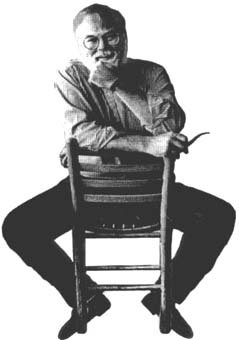
Well, that's quite right. Not only did I not feel the fit at IBM; they didn't feel [it] either. But I put that list down for a reason. If you've got a job and you were paid for it or you volunteered for it, whatever it was. If it was making beds, working as a waitress, digging ditches. I know people who don't want others to know that they once had a job as a trash person or washing toilets or whatever. And my response is that that's part of what makes you who you are. None of them were crazy things when I was young. But the point is, I did them for a period of time and they made an impression on the human being that I am and that's not to be dismissed.
I agree. My own kids are tired of hearing about how, when I was in college, I picked garbage in Yellowstone Park and got struck by lightning. But it's true and it did make a big impact on my life.
IBM was very interesting, to me. I happened to be there just before the punch cards came to an end. It was a great era and IBM was riding high. And I was there at that particular intersection of technology. I was very young but I learned a lot.
You're always running into offbeat characters and beguiling, thought-provoking stories. What makes a person or a story compelling?
I have found it to be profoundly true, that everyone's got some stories. And if you look at people who are a little bit outside the norm to start with in some way, carrying a flag that I'm a little bit different and if you're genuinely interested and got your notebook out, people will tell you their stories. Even ordinary people have amazing stories.
I just finished this week a manuscript for a new novel called If You Love Me Still, Would You Love Me Moving? It's a book built around a dance venue in Seattle called the Century Ballroom. I was given free reign of it for a couple years because I've been learning to dance tango. I got interested in all the other things that were going on there. So, I could ask anybody on the staff, personnel, and pretty soon the word got out among the dancers to tell me a story about the Century Ballroom. And I simply enjoy being in that kind of environment. It's fascinating to me what people will do and know and are about.
Agreed. Your first book Everything I Really Need to Know I Learned in Kindergarten evolved in a meandering, inadvertent way. Yet, once it was published, it became an overnight sensation. Beforehand, you had the luxury of being incognito, but afterwards, you were outed as a writer. Did that success make it more difficult for you to write subsequent books?
Well, yes and no. People like to be around celebrities and so if you are one, whether you want to be one or not, you have a little more entrà ©e into people's lives. It does give you access and certain privileges that you wouldn't have otherwise. It gets you a better table in a restaurant sometimes whether you ask or not. But I find a good part of my life is that I was the person that I pretty much hoped I would be and had pretty much the things I wanted most in life by the time I was 50. By then, you ought to have your wheels pretty much on the track and mine were reasonably so.
So that when fame and fortune came along unsought - I did not put up a manuscript and send it to a publisher; the representative came looking for me. And then, all of a sudden, what you've done, because it's already history, becomes acceptable then you suddenly look in the mirror and think "Why, I are a writer now. And if they'll take that stuff, maybe if I put my mind to it, I could write something else." So, the second book, It Was On Fire When I Lay Down On It came along. And they traded #1 and #2 at the top of the New York Times best-seller list for months. And so I thought, "Well, this is something I can do." But I never thought of making a living as a writer. That's very hard to do, as you know. And, I was lucky enough to now have that as a job. Well, it'd be crazy not to see how far it would go.
And you're still going.